

Login
Log in if you have an account
Register
By creating an account with our store, you will be able to move through the checkout process faster, store multiple addresses, view and track your orders in your account, and more.
Create an accountBike Storage Problems in Toronto Condos
The Tiny Condo Problem

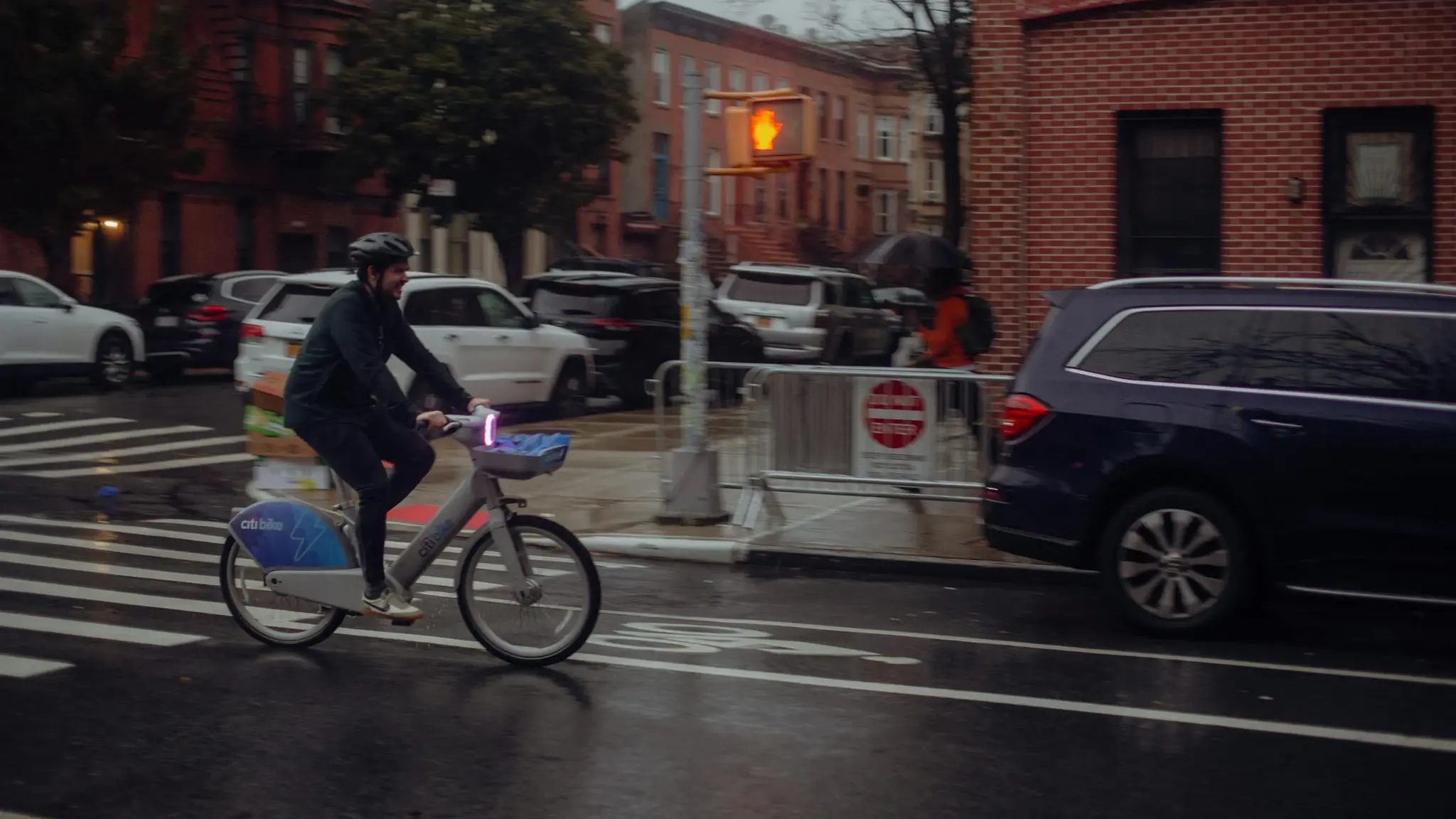
If your Toronto condo feels smaller than expected, you’re not imagining it. Units built between 2016 and 2020 are roughly 400 square feet smaller, on median, than those built between 1971 and 1990. Today’s typical unit sits at around 650 square feet.
That isn’t the result of one unusually bad year. It’s part of a decades-long trend, and there is little indication that it will reverse anytime soon.
Smaller units mean less room for everything—including the bike you bought with every intention of riding to work, brunch or the grocery store.
Many condo towers do not make up for that lost space with convenient bike storage. Bike rooms are often treated as an afterthought: a shared area in the parking garage, reached by a separate elevator and sometimes carrying an additional monthly fee.
Ask around and you’ll hear the same stories repeatedly. A bike room that floods. One that smells like the parking garage it shares space with. A supposedly secure room where someone’s bike still disappears.
None of this is unusual. It is simply what bike ownership looks like in many Toronto buildings.
The problems become even more noticeable when you actually try to ride. Retrieving your bike can mean competing for elevator space during the busiest parts of the day. Crowded racks lead to scraped handlebars, damaged paint and bent derailleurs. Some buildings require a separate fob or key for the bike room, and when the designated elevator is out of service, your ride may be out of reach too.
Then there is the paperwork most riders do not think about until something goes wrong. Depending on the policy, a bike stored in a shared area may not receive the same insurance coverage as one kept inside your unit. Owners and tenants may need additional coverage for theft or damage.
Put it all together and the result is predictable: when a bike becomes genuinely inconvenient to retrieve, people ride it less.
It is not necessarily that they have lost interest in cycling. Their building has simply added too much friction between deciding to ride and getting out the door.
Enter the Brompton
The Brompton was not designed specifically to solve a Toronto condo problem. It predates the city’s modern condo boom by decades.
But the qualities that define it happen to address many of the problems small-space cyclists face today.
Andrew Ritchie began developing the bike in 1975 while living in a flat in South Kensington, London. His window looked toward the Brompton Oratory, which inspired the bike’s name.
Ritchie had tried a Bickerton folding bicycle and found it awkward to use and carry. Many portable bikes of the period simply folded in half, leaving behind a bulky package that was still difficult to manage. He believed a folding bicycle could be designed more effectively.
The result was Brompton’s distinctive three-part fold: compact, self-contained and quick enough to become part of an everyday routine.
That design is a major reason the bike remains so well suited to small-space living decades later. A Brompton is not simply a smaller bicycle that still needs to be stored like a bicycle. It folds into something closer to luggage.
That distinction changes where the bike can go and where it can live.
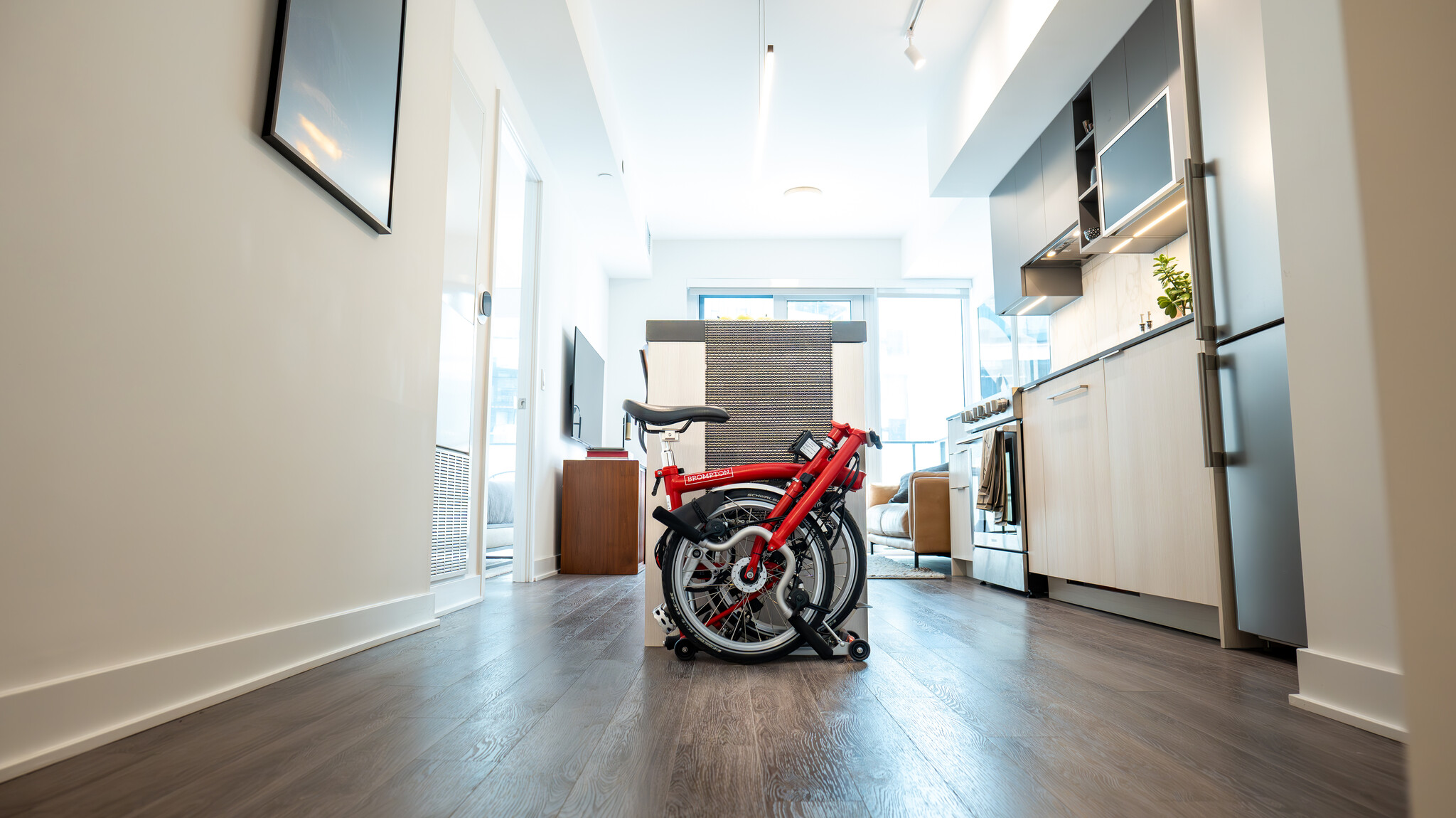
A folded Brompton can travel on transit, sit beside a desk, fit inside a closet or wait near the front door. It does not depend on a separate bike room, an available rack or a trip through the parking garage.
How the Brompton Solves the Problem
It is one thing to say that a bicycle folds. It is another to live with one every day.
This is where the Brompton earns its reputation.
The fold becomes part of the routine
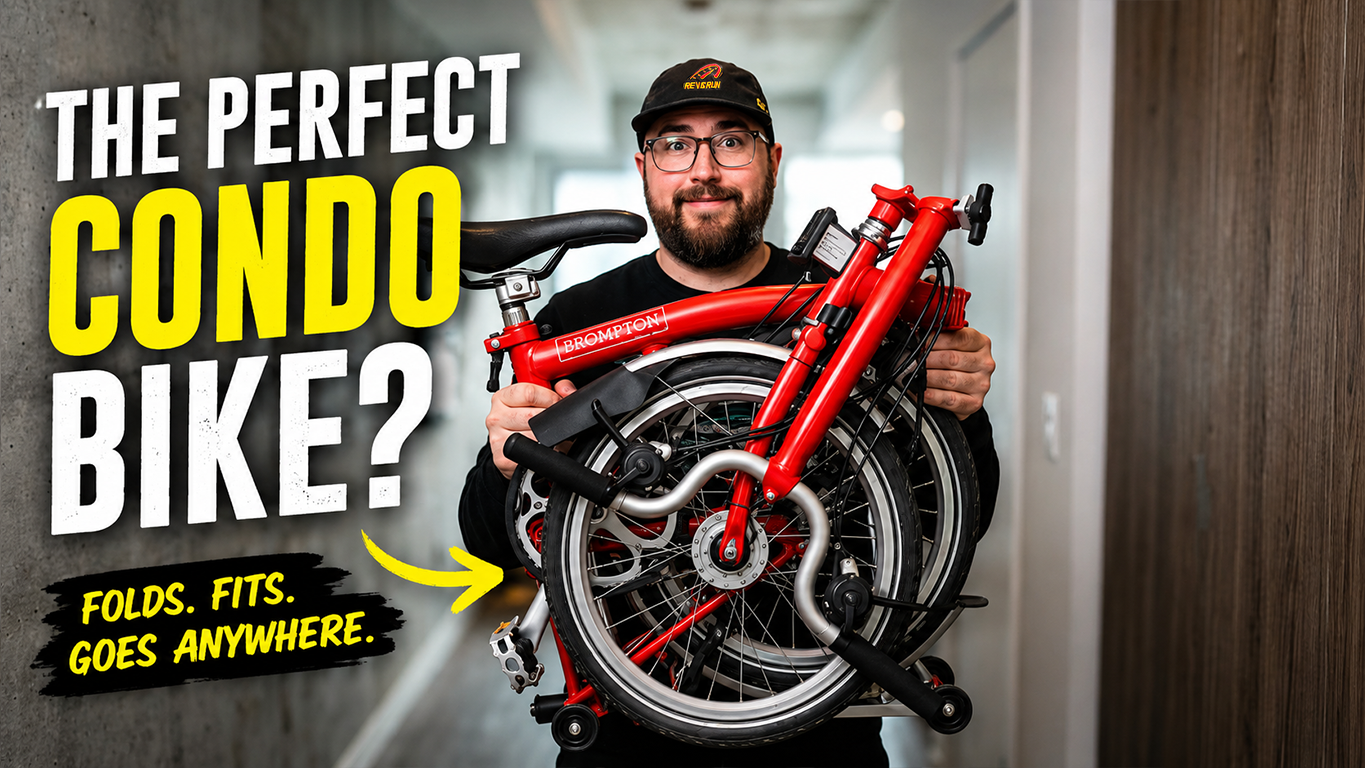
The folding process takes roughly 20 seconds and requires no tools. More importantly, it allows the bike to stay inside your unit.
It can fit under a desk, inside a closet or beside the front door—anywhere you might reasonably store a suitcase.
That means fewer trips to a shared storage room, less exposure to theft or accidental damage and less time spent wrestling a full-size bike through elevators and hallways.
It is built for everyday riding
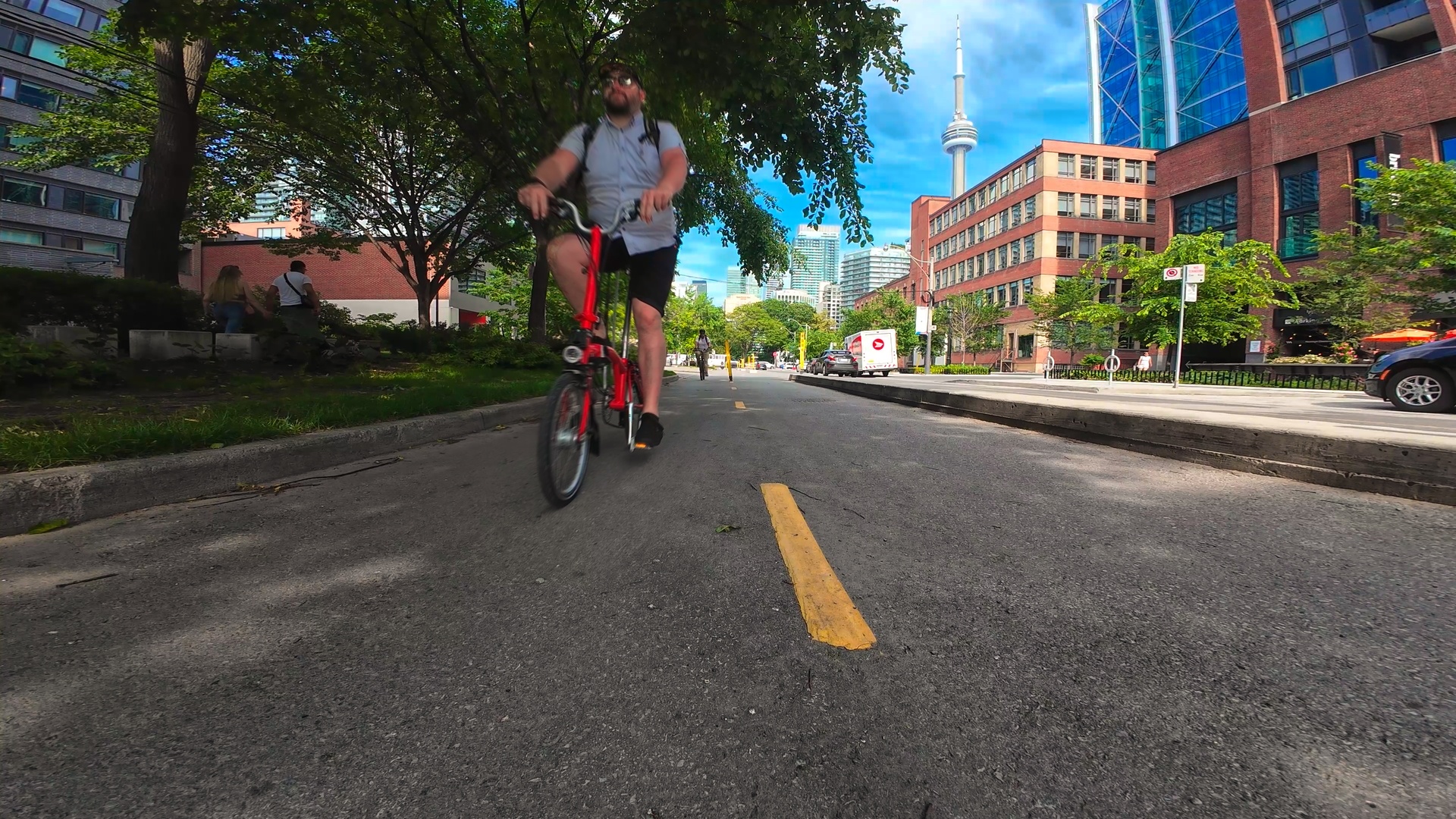
One of the biggest misconceptions about folding bikes is that they are novelty products: something to bring on vacation or take out for an occasional weekend ride.
A Brompton is designed for real daily use. It can handle commuting, errands and the ordinary trips for which you would otherwise use a full-size city bike.
Different gearing options allow riders to choose a setup that better suits flatter urban routes, longer journeys or hillier commutes. The bikes are also designed to be maintained over the long term rather than treated as disposable commuter equipment.
It works with the rest of the city
A folding bike becomes especially useful when cycling is only one part of the trip.
A Brompton can cover the distance between home and the station, travel aboard transit as a folded item and then handle the final stretch at the other end. This makes it useful for commuters whose destination is too far to cycle comfortably but too awkward to reach using transit alone.
The ability to fold the bike also gives riders more flexibility during delays, poor weather or unexpected changes of plan.
Instead of committing to cycling the entire route, you can adapt as the day unfolds.
Who Is It For?
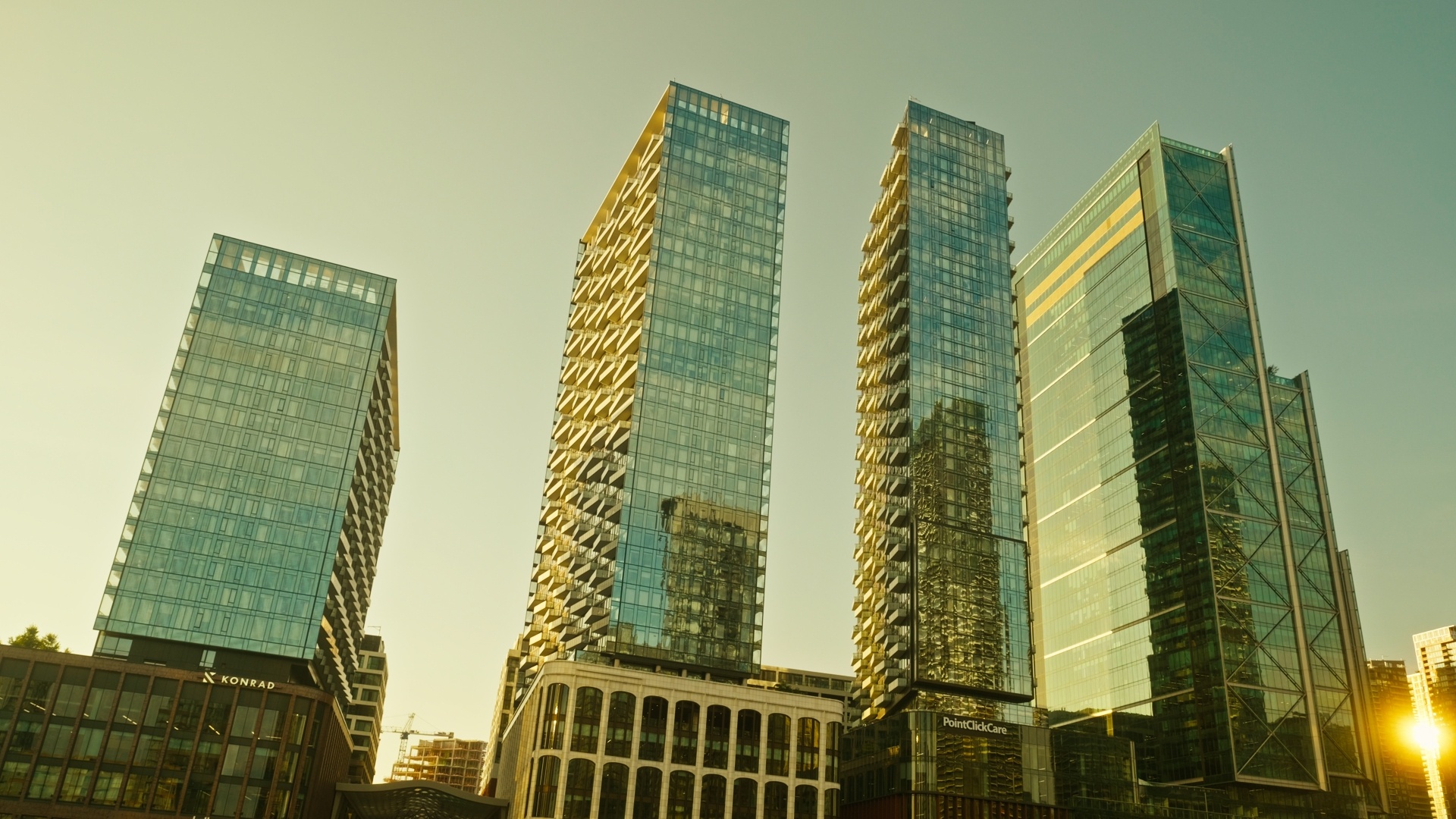
The most obvious audience is the condo commuter: someone who wants to ride regularly but lives in a building that makes owning a full-size bike unnecessarily difficult.
The Brompton also makes sense for several other kinds of riders.
-
Multimodal commuters who combine cycling with transit
-
Small-space renters living in studios, apartments or shared homes
-
Second-bike buyers who want something convenient for errands, short trips and everyday transportation
-
Riders concerned about theft who would rather bring their bicycle inside than leave it locked outdoors
-
People with unpredictable commutes who value the option to switch between riding, walking and transit
The common thread is not simply a lack of space. It is a desire to remove friction.
The easier a bike is to access, carry and integrate into the day, the more likely it is to be used.
Why Fix Coffee + Bikes Carries Brompton
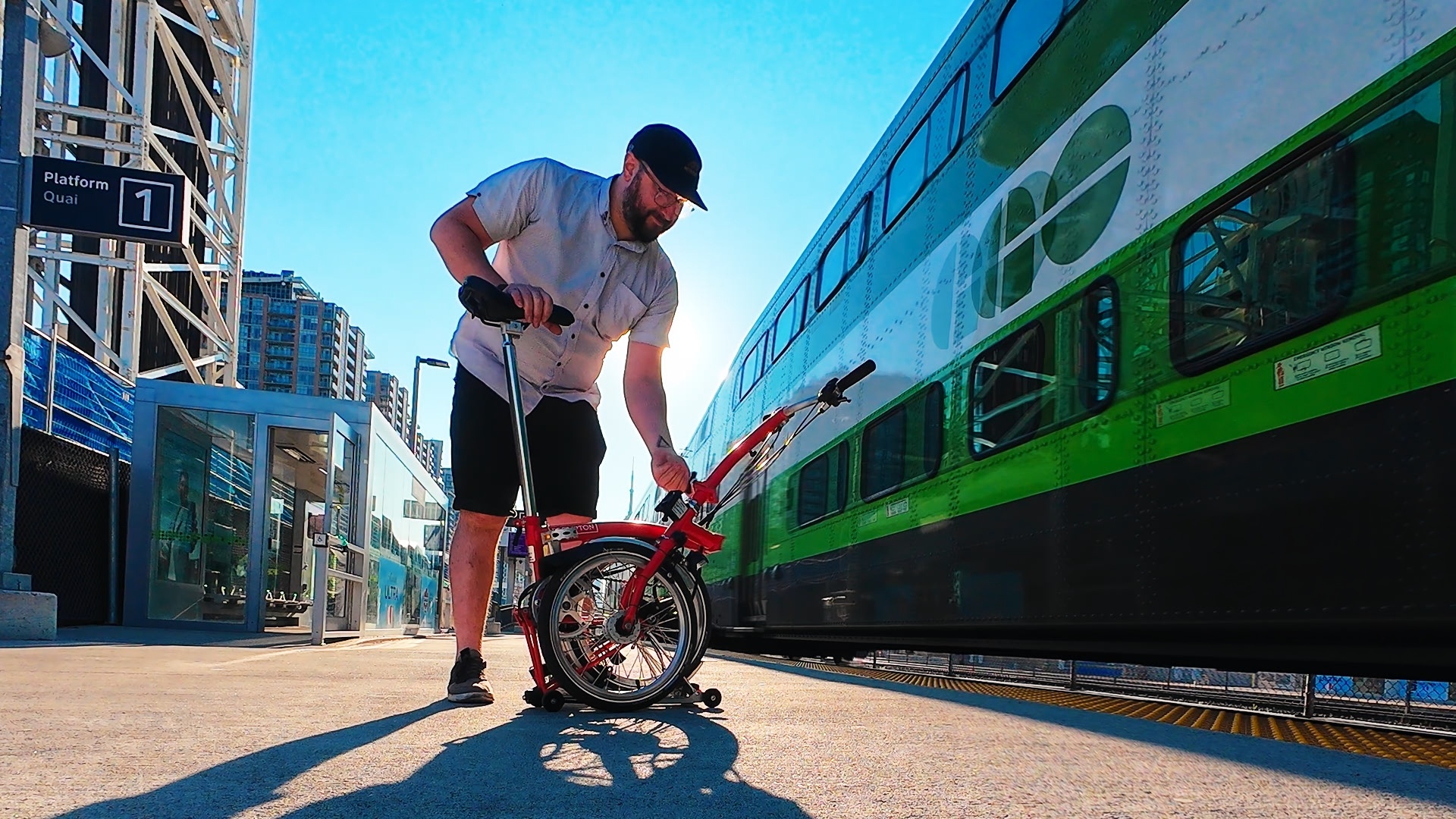
We did not choose Brompton by accident.
It is a bike that reflects how many of our customers actually live: in condos, apartments and small urban spaces where convenient storage is increasingly difficult to find.
Visit us at The Well or Gladstone to test ride one, explore the different configurations and talk through accessories such as bags, lights and rear racks that can make everyday riding easier.
Our team also has years of experience working specifically with Brompton bicycles. Their folding mechanisms, components and maintenance needs are different from those of a conventional bike, so it helps to have them serviced by people who know the system.
And yes, we are also a coffee shop.
Come by for a test ride and stay for a coffee. That is not just a tagline—it is genuinely how many of our regulars first found us.
The Takeaway
Limited space does not have to make bike ownership impractical.
When your building’s bike room is inconvenient, unreliable or nonexistent, the answer may not be finding a better place to store a conventional bike. It may be choosing a bicycle that no longer needs to be stored like one.
We put that idea to the test by folding a Brompton inside an actual staged unit at The Well to see how it fits outside the marketing copy.
Watch the video, Brompton is the Ultimate Condo Bike, to see what happened.
Ready to try one yourself? Visit us at The Well or Gladstone to book a test ride.
Recent articles
View all
Toronto Bike Tune-Up Guide: When, Where & Why It Matters

How to Prep Your Bike for Winter Riding in Toronto